

Arti Ahluwalia is not someone who fits into neat professional boxes—and that’s precisely her power. A system thinker, problem solver, and impact-driven leader, she moves seamlessly between corporate boardrooms and global policy tables, always asking the uncomfortable but necessary questions. Her journey is driven by one core belief: if we are not designing systems that allow humans to remain human, we are already failing.
From Fortune 500 environments to UN policy corridors, Arti’s presence is marked by depth, clarity, and courage. She brings a rare blend of intellectual rigor and emotional intelligence, reminding us that sensitivity is not a weakness—it is a strategic advantage in a fractured world. This Koffee Conversation was not just an interview; it was a mirror held up to modern leadership and humanity itself.

Arti’s career journey began in the corporate world of training, consulting, and learning & development, where she spent over two decades shaping leadership thinking. While the work was impactful, she sensed a deeper disconnect—systems were improving performance but ignoring the human condition. That realization became the turning point.
Stepping away from the safety of structured roles, she transitioned into global advocacy, policy design, and social entrepreneurship. From shaping UN policy documents and contributing to the Pact for the Future, to leading Eco-Civilization India and co-creating global sustainability frameworks, Arti chose the edge over comfort—because real change lives there.
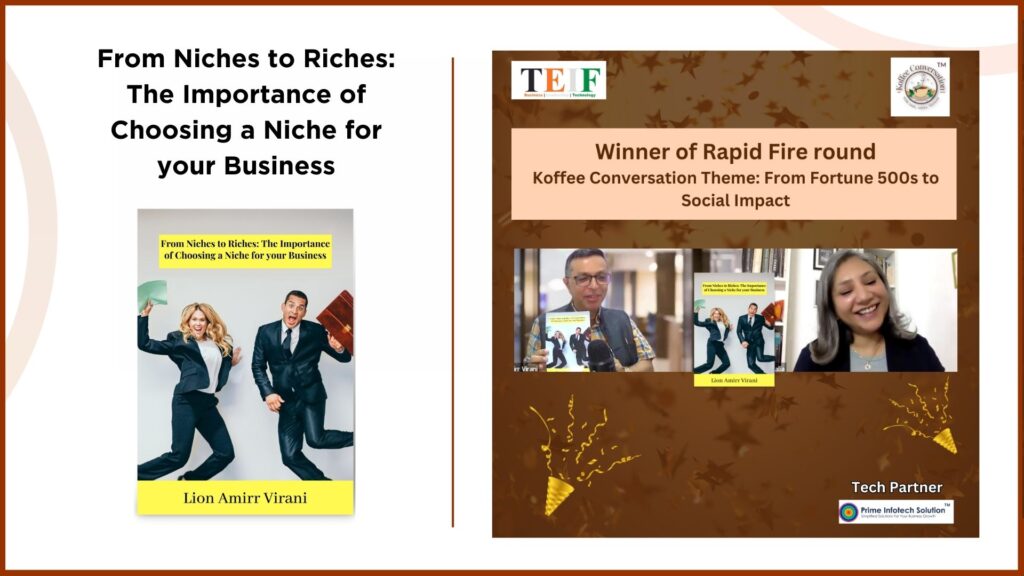
Key Conversation Highlights with Arti Ahluwalia
- A childhood encounter with a tragic plane crash shaped her lifelong empathy for human suffering
- Sensitivity, when ignored by systems, becomes society’s biggest blind spot
- Eco-Civilization is a global movement focused on the human condition, not just climate metrics
- Leadership must balance feminine and masculine energies to restore equilibrium
- Children are the true center of any sustainable future framework
- India lacks a third narrative to understand children beyond marksheets and horoscopes
- Systems thinking is the mother framework behind all modern methodologies
- Design thinking works only when humans—not outcomes—remain at the center
- Corruption is not moral failure but a systemic vulnerability
- Transnational organized crime reveals how collaboration works—just in the wrong direction
- The Pact for the Future marks a critical inflection point in global governance
- Living Cities Earth reframes cities as bio-regions, not concrete clusters
- Real leadership has no fixed plans—only adaptive courage
- Walking is her creative ritual; Star Trek, her intellectual escape
- Humility, not dominance, is the legacy humanity urgently needs
🎥 Watch the full conversation on YouTube and step into a dialogue that challenges how you think about leadership, systems, and what it truly means to be human.




0 Comments