
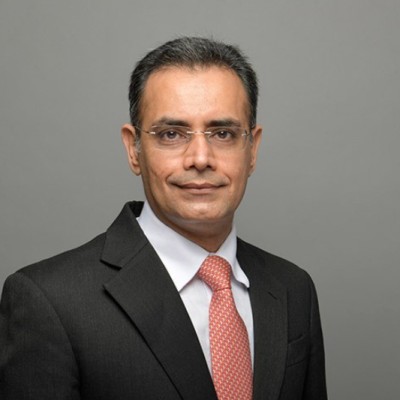
As a Partner at Khaitan & Co, Raj R Panchmatia has built a distinguished career in dispute resolution, with expertise spanning complex commercial disputes, domestic and international arbitration, cross-border enforcement, construction law and disputes involving state-owned entities. His journey has taken him from Mulla & Mulla to Udwadia Udeshi and eventually to Khaitan & Co, while also expanding his professional role as an arbitrator, mediator and contributor to India’s arbitration ecosystem. His early years were particularly shaped by the opportunity to learn arbitration under a senior practitioner whom he describes as one of the finest teachers of his career.
In his conversation on The Koffee Conversation Show, Raj reflects on how each chapter of his career contributed something different to the lawyer he became. From the rigorous training and practical exposure of his early years to the corporate and litigation perspectives he encountered at Udwadia Udeshi, and the progressive culture he found at Khaitan & Co, his journey has been one of continuous learning. He also speaks warmly about Khaitan & Co’s culture, highlighting professionalism, ethics, transparency and an environment where people promote and grow alongside one another.

For Raj, modern arbitration is about far more than knowing the law. International disputes require lawyers to understand different legal systems, cultures and commercial expectations, while complex infrastructure matters demand the ability to work alongside engineers and other technical experts. He emphasises preparation, curiosity and the willingness to learn technical concepts before presenting a matter to a tribunal. Technology is becoming an increasingly important part of this landscape, particularly in document-heavy construction disputes, but Raj is equally clear that AI must remain subject to responsible human oversight. Every AI-generated draft needs to be reviewed, analysed and owned by a lawyer.
Beyond arbitration rooms and boardrooms, Raj’s philosophy is deeply human. He believes dispute resolution is ultimately about understanding what the client wants to achieve—not simply winning an argument—and finding the most effective route, whether through litigation, arbitration, mediation or negotiation. His approach to mentoring reflects the same belief in thoughtful participation: young lawyers should work hard, ask questions, apply their minds and contribute their own views. Even his leadership style has evolved, from the traditional hierarchy of his early years toward giving younger professionals greater flexibility and a voice in decision-making. His own journey—from badminton courts to courtrooms, from advocate to professional leader—reveals a career built on discipline, curiosity, adaptability and a desire to leave knowledge behind for the next generation.
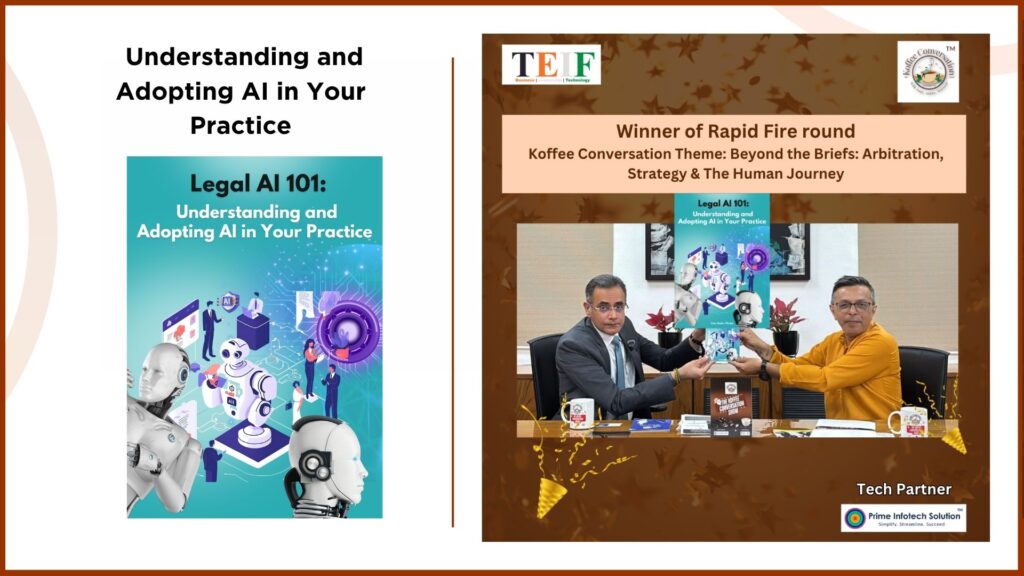
Key Highlights of the Koffee Conversation with Raj R Panchmatia
- Raj R Panchmatia is a Partner at Khaitan & Co.
- He is a dispute resolution professional.
- His practice includes complex commercial disputes.
- He works on domestic and international arbitration.
- His experience includes cross-border enforcement.
- He has worked across multiple leading law firms.
- His professional journey includes Mulla & Mulla.
- He later worked with Udwadia Udeshi.
- He subsequently joined Khaitan & Co.
- His career has evolved from advocate to arbitrator and mediator.
- He has also taken on professional leadership roles in arbitration.
- His early career was strongly influenced by a senior arbitration practitioner.
- He qualified as a solicitor during his early career.
- His early mentor was known for his expertise in arbitration.
- He learned arbitration through practical work and research.
- His mentor encouraged him to explore challenging research questions.
- Practical client handling was an important part of his early learning.
- Innovative thinking shaped his approach to legal practice.
- Udwadia Udeshi exposed him to two different legal personalities and practices.
- One influence gave him exposure to corporate and M&A practice.
- Another gave him extensive litigation exposure.
- He initially considered moving into corporate practice.
- He eventually returned to litigation and dispute resolution.
- He describes Khaitan & Co as progressive and forward-looking.
- He values the firm’s vision and culture.
- He believes organisational culture flows from the top.
- He highlights professionalism as an important part of the firm’s culture.
- Ethics and transparency are central to the environment he describes.
- He values a culture where colleagues promote one another.
- He believes teams should grow together.
- He highlights the importance of nurturing people within an organisation.
- He has worked with arbitration under SIAC.
- His experience includes LCIA arbitrations.
- He has worked with ICC arbitration.
- He has experience with HKIAC and other institutional frameworks.
- Domestic arbitration in India has traditionally been largely ad hoc.
- Institutional arbitration brings greater structure to the process.
- International arbitration frequently uses established arbitral institutions.
- Institutional rules can provide structured timelines.
- International institutions bring professional processes and tested frameworks.
- Credibility is important in cross-border disputes.
- Understanding culture is essential in international arbitration.
- Lawyers need to understand the mindset of clients and counterparties.
- Communication styles can differ significantly across cultures.
- A statement appropriate in one culture may be perceived differently elsewhere.
- Dispute resolution should not become personal.
- Cultural inclusion can help parties work toward resolution.
- Mediation may require bringing together parties with very different cultural perspectives.
- Sovereign disputes can involve questions of sovereign immunity.
- Lawyers need to understand the difference between private and state counterparties.
- Commercial transactions involving states can raise distinct enforcement considerations.
- He has worked on issues involving state-owned entities.
- He contributes to India’s arbitration ecosystem.
- He is associated with the Arbitration Bar of India.
- He is also involved with the Indian Arbitration Forum’s Western Region.
- These platforms aim to promote international arbitration best practices in India.
- Training younger professionals is an important part of this work.
- He believes arbitration knowledge should reach beyond India’s established arbitration centres.
- Best practices can help lawyers in emerging arbitration jurisdictions.
- Arbitrators can also benefit from learning international best practices.
- Complex infrastructure disputes require multidisciplinary knowledge.
- Lawyers may need to understand engineering concepts.
- Construction disputes can involve scheduling and delay analysis.
- Lawyers should maintain an open and inquisitive mind.
- Technical experts can help lawyers understand complex issues.
- Preparation is essential before presenting technical matters to a tribunal.
- He highlights the importance of understanding concurrent delay.
- Baseline schedules can be important in construction disputes.
- Lawyers need to understand why technical concepts matter to the case.
- Technology is increasingly influencing dispute resolution.
- Construction disputes are particularly document-heavy.
- Document-management tools can help organise large volumes of information.
- Technology can help map correspondence and dispute timelines.
- Project planning and delay analysis can benefit from technology.
- AI tools are increasingly being used in infrastructure disputes.
- Technology can assist in identifying and analysing complex project information.
- He believes lawyers need to understand technology.
- AI should be used responsibly in legal practice.
- Human oversight should remain part of AI-assisted legal work.
- AI-generated drafts should be reviewed by lawyers.
- Lawyers should remain responsible for the final work product.
- AI can produce hallucinations or incorrect citations.
- Law firms need clear monitoring of AI use.
- Junior lawyers’ use of AI also requires appropriate oversight.
- Khaitan & Co has developed an in-house AI platform called KAI.
- He describes KAI as an advanced AI platform developed within the firm.
- The firm has adopted policies governing responsible AI use.
- Client consent is important when using AI.
- AI should not be used irresponsibly in legal matters.
- AI-generated work requires human review before use.
- He recognises that AI misuse has occurred across jurisdictions.
- He supports the importance of guidelines around responsible AI use.
- Client objectives should remain central to dispute strategy.
- A client’s desire to win is only one part of the legal conversation.
- Lawyers should help clients understand the other side’s perspective.
- Listening is important in dispute resolution.
- Lawyers need to understand what the client actually wants to achieve.
- The best strategy may not always be litigation.
- Arbitration can be one route to a desired outcome.
- Mediation can be another.
- Negotiation can also provide a solution.
- The client’s desired result should guide the strategy.
- Young lawyers should be hungry for work and willing to learn.
- Hard work is essential in dispute resolution.
- He looks for young lawyers who apply their minds.
- He values lawyers who think independently.
- Young lawyers should ask questions and discuss their reasoning.
- A lawyer may disagree with a senior, provided they can explain their thinking.
- Dedication to the matter is important.
- The legal profession can be demanding.
- Early-career hard work can create a strong professional foundation.
- His leadership style has evolved over time.
- Earlier generations often followed senior instructions without questioning.
- Traditional legal training involved long office hours and strict hierarchy.
- He believes today’s younger generation needs greater flexibility.
- Junior lawyers should be included in decision-making.
- Leaders should listen to younger professionals.
- Leadership requires the ability to evolve.
- Reading remains indispensable in arbitration.
- Arbitration briefs can be extensive.
- There is no substitute for preparation.
- Technology has changed how lawyers research and work.
- Books were followed by Google and now AI-assisted research.
- Technology should supplement rather than replace reading.
- Lawyers must still read their papers carefully.
- They must analyse the law and judgments themselves.
- AI should not become a substitute for independent legal thinking.
- Young lawyers should discuss arguments and ideas with seniors.
- Sharing their thought process can strengthen legal strategy.
- He lives with his parents and wife.
- His wife is also a lawyer.
- He describes himself humorously as never having been a great student.
- Sports played an important role in his formative years.
- Badminton was his major sporting interest.
- He played badminton for university.
- He also played at district level.
- He played for clubs and college.
- He once considered pursuing badminton professionally.
- He eventually moved from the badminton court to the legal courts.
- Long walks help him clear his mind.
- He uses weekends to refresh and prepare for the week.
- He also values time with family and friends.
- Dinners and club activities are part of his downtime.
- He unexpectedly discovered a passion for dramatics during college.
- A friend encouraged him to audition for college dramatics.
- He participated in dramatics for the rest of his five-year college period.
- He considers that experience a memorable part of his student life.
- He has developed a methodical approach to work.
- He likes having structure in place.
- Lists help him organise priorities.
- He believes in completing work properly for the client.
- His proposed professional legacy is connected to mentoring.
- He hopes his juniors remember what they learned from him.
- He values both domestic and international arbitration.
- He sees both litigation and arbitration as important.
- Alaska is one of his dream travel destinations.
- Prakash Padukone is among his favourite badminton players.
- “Think before you react” is a piece of advice he values.
- Tea is his preferred drink for recharging.
- His journey reflects the importance of preparation, strategy, adaptability and human judgement.
- His story demonstrates that great dispute resolution is about more than arguments—it is about understanding people, strategy and outcomes.
▶️ Watch the full episode on YouTube on The Koffee Conversation Show – The Emerging Lawyer and discover Raj R Panchmatia’s insights on arbitration, dispute resolution, AI, construction disputes, leadership, mentoring and the human side of legal practice.
🎧 Listen to the complete podcast on Spotify: The Koffee Conversation Show – The Emerging Lawyer and explore the professional and personal journey of Raj R Panchmatia, Partner at Khaitan & Co.





0 Comments