

Santanu T. Ray, Senior Partner at AAA Insolvency Professionals LLP, brings extensive experience across the financial services industry, having worked in stockbroking, mutual funds, wealth management, insurance, lending, and non-performing asset resolution before transitioning into insolvency and law. His professional journey reflects the value of combining financial expertise, legal understanding, commercial judgement, and people skills to navigate complex corporate situations. In this special Durga Festival episode of The Koffee Conversation Show – The Emerging Professional, Santanu shares how decades of experience in finance prepared him for the demanding world of insolvency, where every assignment calls for sound judgement, fairness, and a commitment to maximising value.
Santanu began his career in 1991, working in the primary market before moving through organisations including Kotak Securities, SBI Mutual Fund, UTI Bank, Birla Sun Life, Edelweiss, and IFCI Financial Services. His responsibilities evolved from business development and investor services to wealth management, lending, and the resolution of distressed assets. It was his experience dealing with defaults and non-performing loans that brought him closer to insolvency. Having also completed his law degree and qualified as an advocate, he found an opportunity to enter the insolvency profession through AAA Insolvency Professionals. The transition brought together his financial background and legal training, equipping him to work across restructuring, liquidation, enforcement, and corporate distress.

For Santanu, insolvency is not simply about a company failing; it is about understanding the stage of distress and determining the most appropriate path forward. Where a business remains viable, early intervention and cooperation between lenders and promoters can create opportunities for revival. Where recovery is no longer realistic, the focus shifts to preserving assets and maximising the value available to stakeholders. His work involving precious jewellery inventories illustrates the importance of transparency and rigorous verification: establishing the authenticity, composition, and quality of assets before valuation and sale can help build buyer confidence and improve realisation. Throughout these processes, Santanu believes an insolvency professional must remain objective, maintain equal distance from competing stakeholders, and act in accordance with the law.
Santanu’s leadership philosophy is rooted in fairness, integrity, and leading by example. He sees insolvency as a multidisciplinary profession that demands a working knowledge of finance, management, business operations, and law. He also recognises the potential of AI to accelerate research and tasks such as claim verification, while emphasising that professional judgement and final validation cannot be delegated to technology. Beyond his work, Santanu credits his mother with instilling the ethical values that continue to guide him. He enjoys reading about current affairs, economics, politics, and law, and finds time to unwind over music and coffee. His message during the Durga Festival is especially meaningful: remain fearless in the face of injustice, stand up for what is right, and never compromise on ethics. His journey demonstrates that turning crisis into opportunity requires not only expertise, but also patience, transparency, and character.
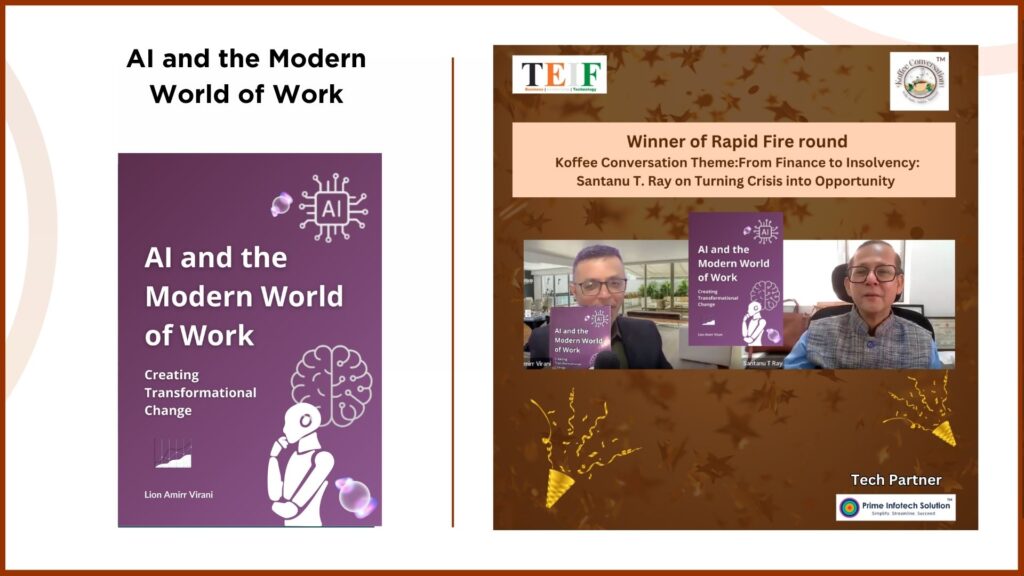
Key Highlights of the Koffee Conversation with Santanu T. Ray
- A Career Built Across Finance: From stockbroking and mutual funds to wealth management, lending, and insolvency.
- The Turning Point at IFCI: How working with defaults and non-performing assets helped shape his transition into insolvency.
- Finance Meets Law: Why financial knowledge, legal expertise, management skills, and people understanding complement one another in insolvency practice.
- Insolvency Beyond Failure: How early intervention can create opportunities to revive distressed businesses.
- Recognising When Revival Is Possible: Why a business’s operating viability, costs, and potential surplus matter when deciding whether it can continue.
- Balancing Competing Stakeholders: Why insolvency professionals must maintain objectivity and follow the legal framework governing stakeholder priorities.
- Preserving and Valuing Assets: The detailed process of verifying jewellery, precious metals, diamonds, and gemstones before valuation and sale.
- Transparency Creates Value: How thorough verification and clear information can build buyer confidence and support better realisation.
- Learning from Complex Assignments: The satisfaction of helping viable companies achieve successful resolution and minimising discounts when assets must be sold.
- Understanding SARFAESI Enforcement: How secured lenders seek to take possession of assets and recover dues through the prescribed enforcement and auction processes.
- Mediation as an Early Intervention Tool: Why resolving commercial disputes before positions harden may prevent some matters from escalating into insolvency.
- Leadership Through Fairness: Why leading by example is more important than simply exercising authority.
- AI in Insolvency Practice: How AI can support research and claim verification, while final decisions and output validation remain professional responsibilities.
- Experience Before Specialisation: Why maturity, practical exposure, and experience working with people are important for aspiring insolvency professionals.
- Ethics Above Everything: The influence of his mother, his commitment to fairness, and his Durga Festival message to remain fearless and stand against injustice.
▶️ Watch the full episode on YouTube on The Koffee Conversation Show – The Emerging Professional and discover Santanu T. Ray’s journey from financial services to insolvency, along with his insights on corporate distress, asset recovery, stakeholder management, and turning difficult situations into opportunities.
🎧 Listen to the complete podcast on Spotify: The Koffee Conversation Show – The Emerging Professional and explore Santanu’s perspectives on insolvency, financial and legal decision-making, ethical leadership, mediation, AI in professional practice, and the importance of standing firm on values.







0 Comments