

Rajeev Ranjan Shahi represents a new-age cyber law professional who operates at the intersection of law, technology, investigation, and policy. As a Cyber Crime Investigator at the Indian Cyber Crime Coordination Centre (I4C), he has been actively involved in tackling complex cyber offenses, advising institutions like Microsoft, and contributing to India’s evolving cyber law ecosystem. What sets him apart is his ability to combine legal expertise with investigative thinking in a domain that is constantly evolving.
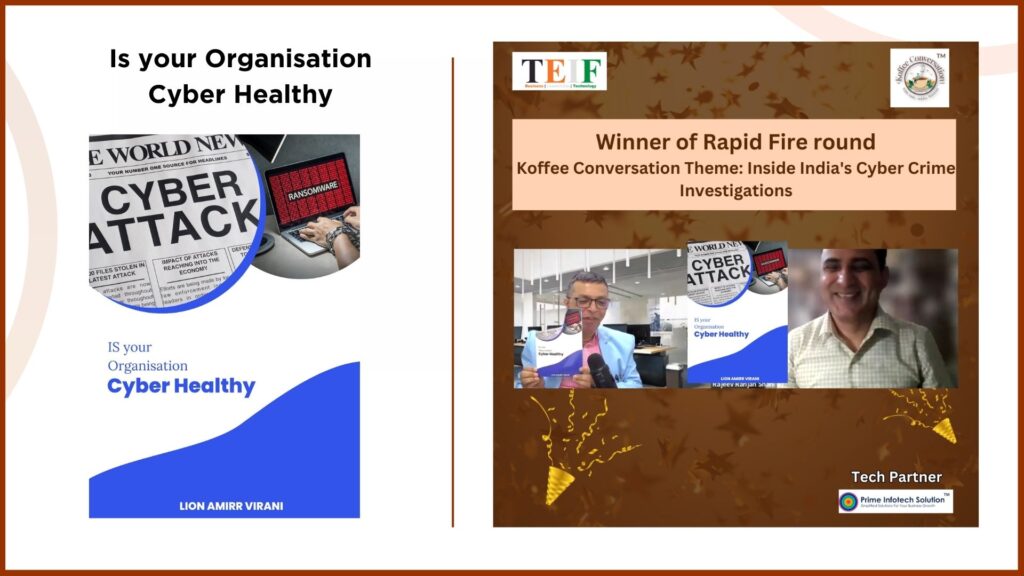
In this episode of The Koffee Conversation Show, Rajeev shares a powerful and ground-level perspective on cybercrime investigations, AI-driven threats, policy-making, digital forensics, and public awareness. His insights highlight a critical truth—cyber law is not a traditional legal field; it is a technology-driven domain that requires continuous learning, adaptability, and interdisciplinary thinking. His journey reflects a professional committed to protecting digital ecosystems while educating society.

Rajeev’s career journey is rooted in strong academic foundations and curiosity-driven learning. With a legal background complemented by technical exposure at institutions like IIIT Allahabad, he developed a unique understanding of cyber law beyond conventional frameworks. His experience spans handling cases involving defamation, intellectual property violations, financial cybercrime, and misrepresentation—giving him a holistic view of digital offenses.
A defining aspect of his journey has been his involvement in policy-making and regulatory advisory. Working closely with government agencies, he has contributed to shaping frameworks that address emerging challenges like AI misuse, data protection, and cyber threats. His journey reflects a blend of investigation, advisory, and education—where solving cases is just one part, and spreading awareness is equally important.
Key Highlights of the Koffee Conversation with Rajeev Ranjan Shahi
- Cyber law is not traditional—it is a technology-driven and evolving legal domain
- AI-generated content and deepfakes pose serious challenges in defamation and fraud cases
- Cybercrime today spans across financial fraud, identity misuse, and IP violations
- Digital forensics is a core skill for anyone entering cybercrime investigation
- Investigation requires a blend of law, technology, and analytical mindset
- Coordination between banks, law enforcement, and global agencies is critical
- Many cybercrimes are cross-border—requiring international cooperation
- Awareness is the first line of defense—prevention is better than cure
- Government initiatives are actively spreading cyber awareness through media and institutions
- Individuals must follow basic cyber hygiene and respect privacy and digital protocols
- Cybercrime investigation is not just about tracking—it’s also about successful prosecution
- Continuous learning through news, judgments, and global regulations is essential
- Global developments like AI regulations influence India’s cyber law evolution
- Policy-making requires balancing technology, law, and stakeholder interests
- The “gray area” between freedom of expression and regulation is one of the most challenging aspects
- Psychology plays a major role in both cybercrime and investigation
- Curiosity, patience, and active listening are critical skills for investigators
- Education and awareness can significantly reduce cybercrime incidents
- Cybersecurity is a shared responsibility—individuals, organizations, and governments must collaborate
- Technology enables both crime and solution—countermeasures evolve alongside threats
▶️ Watch the full episode on YouTube on The Koffee Conversation Show to explore how cybercrime investigations, AI threats, digital forensics, policy-making, and legal strategy come together to protect India’s digital ecosystem.










0 Comments