

Megha Phansalkar, Founder of Tisser Artisan Trust and Tisser Rural Handicraft, is a development professional and social entrepreneur whose journey brings together geography, urban and regional planning, technology and community-led impact. With over 18 years of experience working with the World Bank, along with exposure to organisations such as FAO, WSP, KPMG and the Government of Maharashtra, she has worked across water, sanitation, rural livelihoods and community development. Her academic background includes a PhD in resource planning and management, with a focus on GIS, spatial information and technology-enabled planning. Megha describes her evolution through three interconnected dimensions: geography helped her understand the past, planning helped her shape the present, and impact gives her the opportunity to contribute to the future.
Her years with the World Bank gave her the opportunity to work at the intersection of government institutions and communities. She experienced how development programmes must go beyond policy documents and be shaped around the aspirations and realities of the people they are intended to serve. Among her most memorable assignments were the National Rural Livelihood Project and the National Rural Livelihood Mission, which took her across states and exposed her to the importance of connecting livelihoods with access to water, sanitation, healthcare and education. These experiences strengthened her belief that development challenges cannot be addressed in isolation. It was this understanding, combined with her desire to translate ideas into visible action, that inspired her entrepreneurial leap and the creation of Tisser.

The name Tisser, derived from a French word meaning to weave, reflects Megha’s vision of weaving partnerships, networks, supply chains and opportunities for traditional artisans. Tisser operates through a hybrid model comprising an artisan trust and a private limited company, with the objective of connecting women-led artisan groups and rural communities to design, marketing and urban markets. Rather than functioning simply as a retail platform, it seeks to support the wider artisan ecosystem, including community institutions, NGOs, brands, policy and advocacy. Megha believes that social impact and commercial sustainability must move together: unless artisans receive meaningful market access and their work becomes economically viable, the impact cannot be sustained. Her more recent work in textile recovery and upcycling builds on this philosophy. Through initiatives such as Punar Sutra, which has worked with more than 300 housing societies in Navi Mumbai, and the newly launched Mission Shunya, she is exploring ways to prevent waste from reaching landfills while creating products, livelihoods and economic value from discarded materials.
Beyond entrepreneurship, Megha’s work with Catalyst Now and Catalyst Change Work reflects her commitment to collaboration and systems change. She believes that communities and countries can learn from one another rather than repeatedly reinventing solutions. Her engagement with young people through mentoring and academic institutions also comes from a conviction that entrepreneurship should be nurtured early. Her leadership philosophy is rooted in inclusion, compassion and collective growth. Rather than building Tisser only as a large individual brand, she envisions it as an umbrella under which a thousand other brands can flourish. Personally, Megha is passionate about learning, horse riding, nature and community engagement. Her message to women through the Stree Shakti Series is powerful: women should recognise their own energy and strength, much like the sun, which continues to illuminate the world. For Megha, success is not measured only by what one builds, but also by what one gives back—to people, communities and the country.
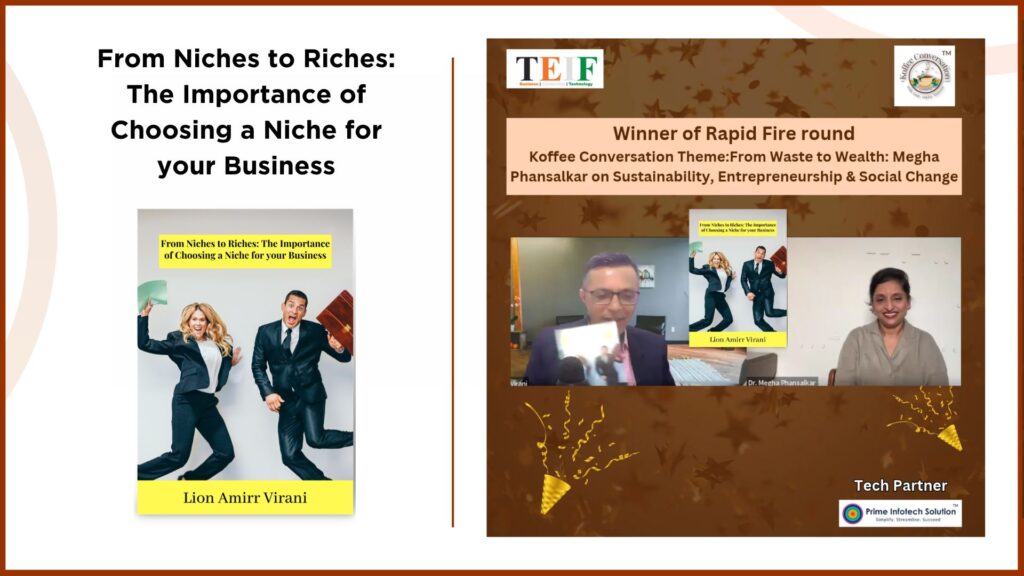
Key Highlights of the Koffee Conversation with Megha Phansalkar
- From Geography to Impact: How geography, urban planning and social entrepreneurship shaped Megha’s professional journey.
- 18+ Years with the World Bank: Lessons from working with governments and communities across development programmes.
- Beyond Policy on Paper: Why successful development requires understanding community aspirations and ground realities.
- Livelihoods at the Centre: How water, sanitation, health, education and livelihoods are deeply interconnected.
- The Birth of Tisser: The story behind creating an organisation that connects artisans, partnerships and markets.
- Weaving Social Impact with Business: Why commercial sustainability is essential for long-term community impact.
- Empowering India’s Artisan Ecosystem: Connecting traditional crafts and women-led groups with design, marketing and market opportunities.
- Understanding India’s Craft Diversity: The regional traditions, techniques and cultural influences that make Indian handicrafts distinctive.
- From Waste to Wealth: How textile recovery, recycling and upcycling can create livelihoods and reduce landfill waste.
- Introducing Mission Shunya: A vision for zero waste through innovative, community-driven solutions, beginning with Mumbai.
- Conscious Consumer Choices: Why consumers should understand how products are made, where materials come from and who makes them.
- Collaboration for Systems Change: Learning from global experiences and bringing different stakeholders together to solve complex challenges.
- Nurturing Young Entrepreneurs: Why entrepreneurship needs to be encouraged early and developed through mentoring and practical exposure.
- Leadership Through Inclusion: Megha’s vision of creating an ecosystem where many brands and communities can grow together.
- Resilience, Happiness and Giving Back: Her reflections on personal purpose, women’s strength and the responsibility to contribute to society.
▶️ Watch the full episode on YouTube on The Koffee Conversation Show – Stree Shakti Series and discover Megha Phansalkar’s inspiring journey from global development programmes to social entrepreneurship. Explore how Tisser is empowering artisans, transforming textile waste into opportunity and building sustainable livelihood models through collaboration and innovation.
🎧 Listen to the complete podcast on Spotify: The Koffee Conversation Show – Stree Shakti Series and hear Megha share her perspectives on sustainability, circularity, conscious consumption, women’s empowerment, entrepreneurship and the importance of creating meaningful social change.







0 Comments