
Pritam Sinhaa represents the modern pharmacovigilance professional who combines scientific expertise, regulatory understanding, and operational excellence to safeguard patient safety worldwide. With over 12 years of experience across global pharmacovigilance, safety governance, PV agreements, compliance management, audit readiness, and cross-functional collaboration, Pritam has contributed significantly to building inspection-ready pharmacovigilance ecosystems across leading organizations.
In this episode of The Koffee Conversation Show – Emerging Professional Series, Pritam shares a highly insightful perspective on pharmacovigilance, patient safety, regulatory compliance, audit governance, leadership, AI adoption, and the evolving future of global drug safety. His insights highlight a powerful truth—behind every medicine consumed by patients worldwide is an extensive safety monitoring system designed to ensure that treatments remain safe and effective throughout their lifecycle.

Pritam’s journey into pharmacovigilance began through his deep interest in chemistry and pharmaceutical sciences. After completing his Master of Pharmacy, he gradually discovered the immense responsibility associated with patient safety and medicine monitoring. What attracted him most was the opportunity to contribute directly to ensuring that medicines remain both safe and effective for millions of patients globally. Over the years, this curiosity evolved into a passion for safety governance and regulatory excellence.
A defining aspect of his career has been his expertise in bridging scientific, regulatory, business, and operational functions. Whether managing PV agreements, supporting audits, collaborating with IT teams, or working with global stakeholders, Pritam consistently emphasizes that pharmacovigilance is never the responsibility of a single department—it is a collaborative ecosystem built on trust, documentation, compliance, and continuous improvement.
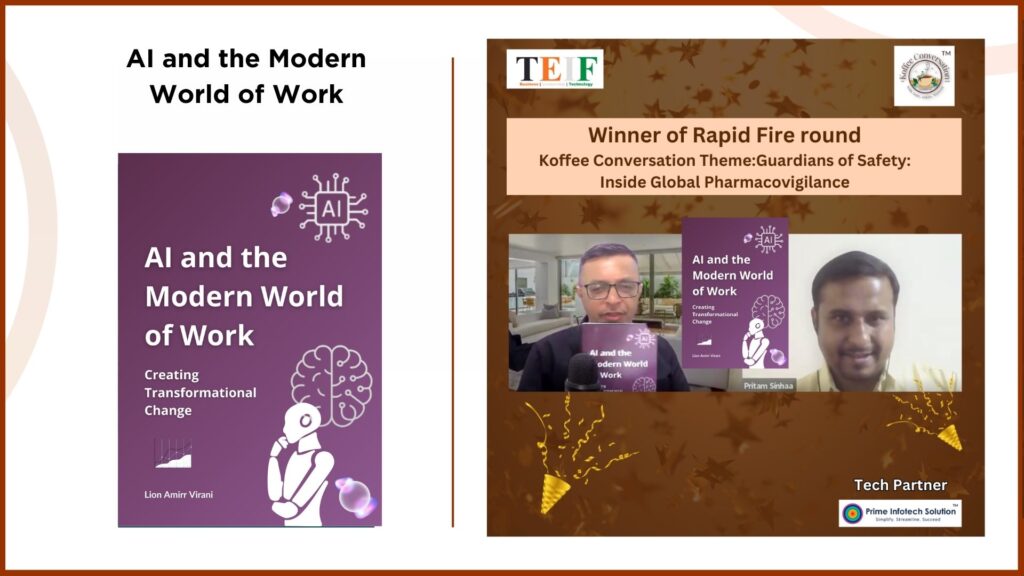
Key Highlights of the Koffee Conversation with Pritam Sinhaa
- Pharmacovigilance is the continuous monitoring of medicines to ensure their safety and effectiveness throughout their lifecycle
- Patient safety remains the core objective of every pharmacovigilance activity
- Medicines must repeatedly demonstrate safety and effectiveness even after market approval
- Global pharmacovigilance relies heavily on data collection, analysis, reporting, and regulatory submissions
- PV agreements play a critical role in defining safety responsibilities between organizations
- Strong agreement governance improves operational efficiency and reduces unnecessary workload
- Clearly defined product scope and responsibilities prevent data flow confusion between partners
- Pharmacovigilance is inherently a cross-functional discipline
- Effective PV operations require collaboration among medical professionals, pharmacists, IT teams, regulatory experts, business teams, and safety specialists
- Technology infrastructure is essential for modern pharmacovigilance operations
- Safety databases play a critical role in managing large volumes of adverse event information
- Regulatory compliance cannot be compromised because patient lives are directly impacted
- Pharmacovigilance professionals must balance regulatory precision with business realities
- Compliance decisions should always prioritize patient safety over commercial convenience
- APAC markets present unique compliance challenges due to country-specific regulatory requirements
- Language requirements in countries such as China and Japan create additional operational complexities
- Regulatory requirements across APAC markets often differ through small but critical nuances
- Understanding regional regulatory differences is essential for successful global operations
- Audit readiness should be embedded into daily operations rather than treated as a periodic exercise
- Documentation remains one of the most important pillars of pharmacovigilance
- If an activity is not documented, it effectively does not exist from a compliance perspective
- Deviations should be identified, documented, investigated, and resolved proactively
- Successful audits depend on transparency rather than perfection
- Continuous process improvement strengthens inspection readiness
- Attention to detail is one of the most valuable skills in pharmacovigilance
- Leadership should be approachable, emotionally intelligent, and focused on developing people
- Strong leaders listen actively and remain accessible to team members
- Psychological safety encourages stronger collaboration and better performance
- Future leaders must understand both technology and AI applications
- Leaders should guide teams on responsible AI usage while protecting sensitive data
- AI and automation are transforming pharmacovigilance workflows
- Large-scale safety monitoring requires technology to manage millions of data points efficiently
- Human oversight remains essential despite growing automation capabilities
- AI cannot fully replace medical judgment and pharmacovigilance expertise
- Data privacy, reproducibility, and governance remain key considerations when adopting AI
- Future-ready pharmacovigilance professionals must continuously track evolving regulations
- LinkedIn, digital learning platforms, and AI tools are becoming valuable professional learning resources
- Continuous learning and regulatory awareness are critical for long-term success
- Global professionals must remain curious and adaptable in a rapidly changing healthcare environment
- Collaboration and knowledge-sharing are becoming increasingly important in the future of pharmacovigilance
- Truthfulness, transparency, and integrity remain foundational professional values
- Attention to detail and compliance discipline directly contribute to patient safety outcomes
▶️ Watch the full episode on YouTube on The Koffee Conversation Show – Emerging Professional Series to explore how pharmacovigilance, patient safety, compliance governance, audit readiness, AI, leadership, and global healthcare regulations come together to protect millions of patients worldwide.
🎧 Listen to the full episode on Spotify on The Koffee Conversation Show – Emerging Professional Series to gain deeper insights into global pharmacovigilance, patient safety, regulatory compliance, audit excellence, AI adoption, leadership, and the evolving future of healthcare governance.










0 Comments